



Dive into the world of AI agents and uncover the latest advancements and forecasts for their role in 2025. Prepare for the future.AI Agents in 2025: Advancements and Predictions.
As we near 2025, the world of artificial intelligence agents is set for big changes. AI agents in 2025 will be key in many industries. People wonder what these changes mean for our lives and work. It’s important to know where AI agents are now and where they’re headed.


By 2025, the gap between AI’s promises and real use will be clear. People want to see real benefits from AI. More AI will involve humans, thanks to its ability to learn and adapt.
Arjun Pillai, Co-Founder & CEO of Docket, says AI agents in 2025 will be more thoughtful. They will focus on careful use and clear goals.
Key Takeaways
- The future of ai agents in 2025 will be more measured and thoughtful, with a focus on careful deployment and strategic expectations.
- AI agents in 2025 are expected to efficiently handle tasks involving information collection and synthesis, with a significant impact on industries reliant on these functions.
- The introduction of artificial intelligence agents capable of generating digital outputs is anticipated to transform operational workflows.
- By 2025, ai agents may begin replicating the role of traditional travel agents, managing complex, multi-step tasks with increased understanding of personal preferences.
- AI agents are expected to learn and adapt to user habits and preferences, enriching their performance over time.
- The emphasis on human-centered ai is likely to increase as integration into daily life becomes more prevalent, necessitating a focus on equity and the minimization of biases in ai systems.
The Current State of AI Agents
Advanced ai technology has led to big changes in intelligent virtual agents. They can now do complex tasks more efficiently. Moody’s Ratings says we’ll see big improvements in AI agents in 2025. This is thanks to better machine learning.
AI has made big strides, showing how it can boost efficiency and help AI grow in many areas. For example, OpenAI’s o3 model got an 87% score on a test that checks problem-solving skills. Also, AI agents now need more power to work, showing they’re moving from simple chat to real tasks.
AI agents are already helping in real life. Harvey’s legal AI agents work with lawyers on tough tasks like S-1 filings. In healthcare, AI agents write clinical notes from talks with patients. These examples show how AI is becoming key in many fields.
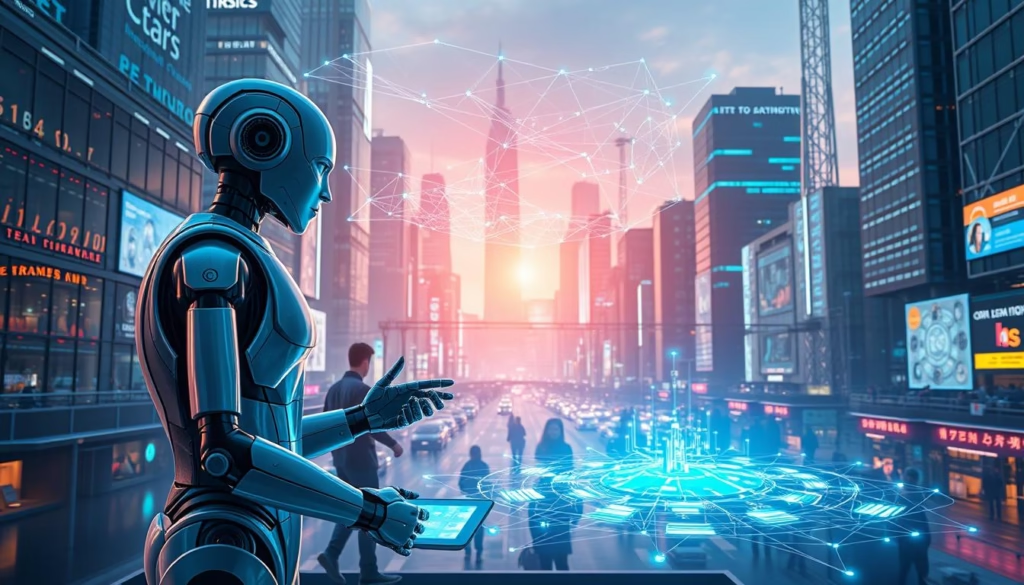
As AI agents get better, they’ll help businesses grow and innovate more. They learn from their experiences, making decisions better. This leads to more work done and better results. Companies like Salesforce see big gains from using AI agents for coding tasks.
AI Agents in 2025: A Comprehensive Forecast
By 2025, AI agents will play a big role in many industries. Cap Gem Research Institute says about 70% of companies want to use AI agents. They will help with tasks like checking code, making draft reports, and researching online.
The future of ai agents is bright, with big names like Oracle, Salesforce, and Microsoft on board. But, there’s a risk of cyber attacks, like prompt injection attacks. These attacks could sneak malicious codes into AI’s tasks.
Some benefits of AI agents in 2025 include:
- Enhanced decision-making capabilities
- Improved efficiency and productivity
- Increased accuracy and precision
The cutting-edge ai agents will grow a lot by 2025. There will be more money going into AI startups. Sertis’ tech leaders say 2025 will bring better reasoning, domain-specific solutions, and cost-effective deployment.
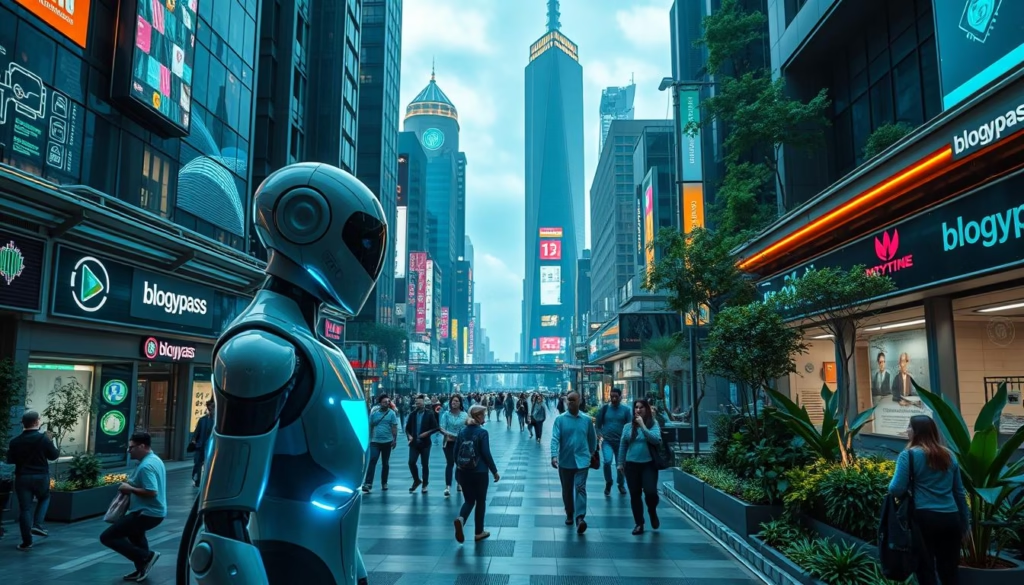
In conclusion, the future of ai agents in 2025 is exciting. With more advancements and investments, AI agents will change industries and how businesses work.
| Year | AI Agent Adoption Rate |
|---|---|
| 2025 | 70% |
| 2027 | 50% |
Revolutionary Changes in Machine Learning Architecture
Looking ahead, machine learning agents in 2025 will be key in AI’s future. They will get smarter and make decisions on their own. Sertis’ CEO & Founder, Tee Vachiramon, believes 2025 will see big steps in AI’s reasoning abilities.
The rise of next-generation digital assistants will be a big part of this change. They will work with humans and other AI to achieve big goals. Evolving ai technologies will help AI agents learn and adapt, making them better at their jobs. Some major advancements include:
- Neural network improvements for better data analysis
- Self-learning abilities for adapting to new situations
- Better decision-making systems for more accurate choices
These changes will impact many fields, like healthcare, finance, and manufacturing. AI agents will help diagnose diseases and improve supply chain management. They will also predict market trends.

As we move forward, we must think about the good and bad of these changes. Machine learning agents in 2025 could greatly improve how we work and make decisions. But, we must also make sure AI is used responsibly and for the good of all.
The Integration of AI Agents in Business Operations
Looking ahead to 2025, AI agents will be key in business. They will automate tasks, improve customer service, and boost productivity. The AI agents market is expected to jump from $5.1 billion in 2024 to $47.1 billion by 2030.
AI agents work around the clock, freeing up human staff for more important tasks. This leads to better efficiency and productivity. Artificial intelligence agents also help with logistics by predicting demand and managing inventory.
Big names like Microsoft, Google, Amazon, and IBM are investing in AI agents. Microsoft aims to introduce ten new agents for Dynamics 365. Google Cloud’s Vertex AI Agent Builder lets companies create AI agents without coding. The future of AI agents is bright, with many industries set to benefit.
- Finance: AI tools boost productivity and customer happiness
- Healthcare: AI agents help with hiring and scheduling, making the process smoother
- Retail: AI agents automate tasks, making sales more efficient
| Company | AI Agent Implementation | Results |
|---|---|---|
| Clara | Handled 2.3 million customer interactions | 25% less repeat inquiries, average resolution time dropped from 11 minutes to 2 minutes |
Emerging Applications Across Industries
As advanced ai technology grows, it’s being used in many fields. This change is making businesses work smarter. Intelligent virtual agents help automate tasks, improve customer service, and spark new ideas.
In areas like healthcare, finance, and manufacturing, cutting-edge ai agents are making a big impact. For example, AI chatbots offer round-the-clock support. AI analytics help companies make better decisions by analyzing data.
- Healthcare: AI-powered diagnostic tools, personalized medicine, and patient engagement platforms
- Finance: AI-driven trading platforms, risk management systems, and customer service chatbots
- Manufacturing: AI-powered predictive maintenance, quality control, and supply chain optimization
- Retail: AI-driven customer service, personalized marketing, and inventory management
| Industry | Application | Benefits |
|---|---|---|
| Healthcare | AI-powered diagnostic tools | Improved accuracy, reduced costs |
| Finance | AI-driven trading platforms | Increased efficiency, reduced risk |
| Manufacturing | AI-powered predictive maintenance | Reduced downtime, increased productivity |
| Retail | AI-driven customer service | Improved customer experience, increased sales |
Security and Ethical Considerations
As ai agents in 2025 advance, security and ethics grow more critical. The future of ai agents depends on solving data protection and responsible AI development issues. Tee Vachiramon notes that AI and quantum computing will boost encryption and cybersecurity, key for artificial intelligence agents.
The rise of ai agents in 2025 brings up many ethical questions. Handling vast personal data can lead to privacy breaches if not managed well. To avoid these, strong data governance and regular audits are vital. They ensure AI is transparent, fair, and accountable.
- Ensuring the security and integrity of AI systems
- Implementing transparent and explainable AI decision-making processes
- Protecting user data and preventing unauthorized access
As artificial intelligence agents become more common, we must tackle these security and ethical issues. This ensures the safe and responsible growth of ai agents in 2025. By focusing on these, we can fully realize the future of ai agents and build a secure, trustworthy AI world.
Impact on Human Workforce and Society
The use of machine learning agents in 2025 will change many jobs, mainly in office work. Next-generation digital assistants will take over simple tasks. This lets humans concentrate on big decisions and creative ideas. AI will keep getting better, using data to boost security.
Experts say AI agents will be in many jobs in two years. This will make work more productive and creative. But, it also means some jobs might disappear. We’ll need to learn new skills and adapt to these changes.
Some big points about AI agents include:
- Work will be more productive and creative.
- Some jobs might disappear, and we’ll need to learn new skills.
- There could be bigger gaps in wealth as AI makes some jobs more efficient but risks others.
We must deal with these issues as AI becomes more common. By using machine learning agents and digital assistants, we can make work better. This will also help society and ensure AI is used responsibly.
The future of work and society with AI depends on how we adapt. By using AI wisely, we can work together with machines. This will lead to new ideas and growth.
| Industry | Potential Impact of AI Agents |
|---|---|
| Healthcare | Personalized recommendations, improved treatment planning, and patient monitoring accuracy |
| Finance | Fraud detection, algorithmic trading, and enhanced security |
| Manufacturing | Predictive maintenance, reduced downtime, and improved operational efficiency |
Technical Infrastructure Requirements
As companies use advanced ai technology, they need to think about the technical setup. Aubin Samacoits, Director of Data Research & Consulting at Sertis, says new AI agents and chips make on-premise AI affordable.
Some important things to consider for technical setup include:
- Computing power demands: High-performance GPUs/TPUs are key for AI model training and execution. They support models with thousands to millions of parameters.
- Network architecture updates: Low-latency networks are vital for real-time AI interactions. Latency needs to be under 10 milliseconds.
Investing in the right technical setup lets companies fully use advanced ai technology. This drives business innovation and growth.
As storage needs grow, companies must focus on scalable and secure infrastructure for AI. With AI integration among tech vendors speeding up, picking the right partners is critical.
| Technical Infrastructure Component | Requirement |
|---|---|
| Computing Power | High-performance GPUs/TPUs |
| Network Architecture | Low-latency networks |
| Storage | Scalable and secure infrastructure |
Global AI Agent Development Race
The race to create advanced artificial intelligence agents is getting fiercer. Many companies and countries are pouring a lot of money into this field. Moody’s Ratings says we’re entering a new phase, with a focus on making these agents better and easier to use.
Some big names are making moves. Salesforce wants to roll out 1 billion ai agents in just a year. OpenAI plans to introduce a personal ai agent in 2025. Google is working on personal ai agents too, after announcing Gemini 2.0. The future of ai agents is exciting, with lots of possibilities in different fields.
Here are some major players in the ai agents race:
- Microsoft is adding ai agents to some of its products, like Copilot Actions
- Meta is working on Llama 3 and using lots of GPU resources
- OpenAI is set to release a personal ai agent in 2025
The global ai agent development race will likely lead to more innovation and progress in artificial intelligence agents. But, there are also risks and benefits to consider. As the competition grows, it’s important to set standards for how these agents interact and make sure humans are involved in key decisions.
Conclusion: Preparing for the AI Agent Revolution
Asmachine learning agents in 2025bring big changes, companies need to get ready for the arrival ofnext-generation digital assistants. Top tech leaders at Sertis say we’ll see huge leaps in AI’s ability to reason, solve specific problems, and be more affordable.
AI agents will make work better by fixing slow spots, solving talent gaps, and speeding up decisions. They will work with new tech to make enterprise tech stacks even stronger. With a smart AI plan and training, businesses can use AI to innovate and stay ahead.
As AI agents do more work, we must update rules for safety and security. Starting with small tests can show how well AI works before using it everywhere. By jumping into this new era, companies can offer better customer service, smoother IT, and better sales and marketing.
FAQ
What are the key capabilities and limitations of modern AI agents?
Modern AI agents can now do complex tasks thanks to machine learning. But, they need careful use and clear goals.
What are the expected breakthroughs in AI agents by 2025?
By 2025, AI agents will improve a lot. They will get better at solving problems and be more affordable. This will change many industries and how businesses work.
How will the integration of AI agents impact business operations?
Adding AI agents to business can make things more efficient and productive. But, it’s important to use AI wisely. Companies that do well will use AI smartly and not try to fix broken systems too fast.
What are the emerging applications of AI agents across different industries?
AI agents are being used in healthcare, finance, manufacturing, and retail. They help make businesses run better. The competition among AI makers is making products better and more affordable. This is helping businesses get more done and be more creative.
What are the security and ethical considerations of AI agents?
As AI agents become more common, we need to think about their safety and ethics. The mix of AI and quantum computing will lead to better ways to keep data safe. This ensures AI is used responsibly.
How will AI agents impact the human workforce and society?
AI agents will change the job market, requiring new skills. They will also have big social effects. AI will help with security and keep getting better, helping with the impact on jobs and society.
What are the technical infrastructure requirements for AI agents?
To use AI agents, we need better computers, networks, and special chips. This makes it possible to use AI without spending too much money.
What is the global AI agent development race?
The world is racing to make better AI. Countries and companies are competing to lead in AI. This competition is driving new ideas and making AI better for everyone.


